Introduction to common anti-corrosion methods for grid steel structures!
更新時間:2025-01-24 15:30:29?點擊:41243 ? Grid Knowledge
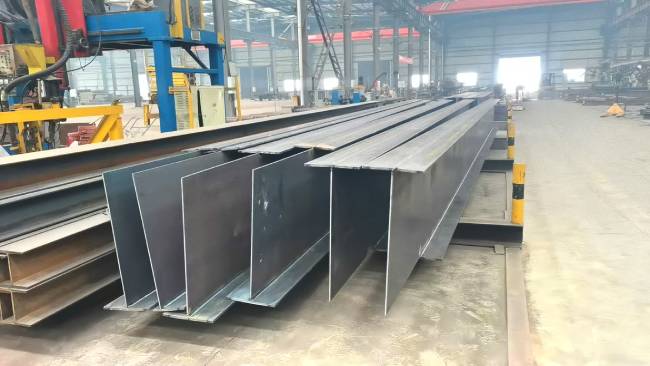
Anti corrosion of steel structures is an important measure to ensure their durability and safety. Common anti-corrosion methods include coating anti-corrosion, metal thermal spraying anti-corrosion, cathodic protection anti-corrosion, and the use of weather resistant steel. The following are specific introductions:
Coating anti-corrosionPrinciple: By applying a coating on the surface of the steel structure, a continuous protective film is formed to isolate the steel from corrosive media such as air, moisture, and chemicals, thereby achieving the purpose of corrosion prevention.
Common materials include oil-based paint, alkyd paint, epoxy paint, polyurethane paint, etc. Among them, epoxy paint has good adhesion and chemical corrosion resistance; Polyurethane paint has excellent weather resistance and wear resistance.
Construction points: Before construction, strict rust removal treatment must be carried out on the surface of the steel structure, generally requiring a Sa2.5 or St3 standard to ensure good adhesion between the coating and the steel surface. During construction, it is necessary to control the ambient temperature and humidity, usually between 5 ℃ and 35 ℃, with a relative humidity not exceeding 80%. The coating should be applied or sprayed strictly according to the construction process of the coating to ensure uniform coating thickness and meet the design requirements.
Metal thermal spraying for corrosion prevention
Principle: Using a high-temperature heat source to melt metal materials, and using compressed air to atomize the melted metal into tiny particles, spraying them onto the surface of steel structures to form a layer of metal coating, which serves to isolate corrosive media and provide cathodic protection.
Common materials: mainly including zinc, aluminum, and their alloys. Zinc and aluminum can rapidly oxidize in air, forming a dense oxide film that prevents further corrosion.
Key points of construction: Thoroughly remove rust from the surface of steel structures, generally using sandblasting to achieve Sa3 level standards. During the thermal spraying process, it is necessary to strictly control the spraying process parameters, such as the distance, angle, and spraying speed between the spray gun and the workpiece, to ensure the quality and thickness uniformity of the coating. After spraying, it is usually necessary to perform sealing treatment, such as coating with sealing paint, to improve the anti-corrosion performance of the coating.
Cathodic protection and anti-corrosion
Principle: By applying an external current or sacrificing the anode, the surface of the steel structure becomes the cathode, thereby suppressing the corrosion process of the steel. In electrolyte solutions, the corrosion of metals is caused by anodic reactions leading to metal dissolution, while cathodic protection is achieved by changing the electrode potential of the metal surface to suppress the anodic reactions on the metal surface, thereby achieving the purpose of corrosion prevention.
Common materials: The sacrificial anode method commonly uses anode materials such as magnesium alloy, zinc alloy, and aluminum alloy; The external current method requires the use of auxiliary anodes such as graphite, high silicon cast iron, etc.
Construction points: When using sacrificial anode method for construction, the number and position of anodes should be reasonably calculated and arranged based on factors such as the area of the protected structure and the environment, to ensure uniform protection potential. When using the external current method for construction, it is necessary to install equipment such as potentiometers, accurately adjust and control the protective current and potential, and at the same time, ensure proper cable connection and insulation treatment to prevent leakage and interference.
Using weather resistant steel
Principle: Weathering steel is made by adding a small amount of alloying elements such as copper, phosphorus, chromium, nickel, etc. to ordinary steel, so that the steel can form a dense and stable rust layer in the atmosphere. This rust layer can prevent external corrosive media from contacting the steel substrate, thereby playing a self-protection role and improving the atmospheric corrosion resistance of the steel.
Common materials: Common weathering steels include Q235NH, Q345NH and other series.
Construction points: During the processing and welding of weathering steel, attention should be paid to controlling the process parameters to avoid the burning of alloy elements due to overheating and other reasons, which may affect its weathering performance. During the construction process, try to minimize damage to the surface of the steel and maintain its integrity to facilitate the formation and stability of the rust layer.
In practical engineering, various anti-corrosion methods are usually adopted comprehensively based on factors such as the usage environment, design requirements, and economic costs of steel structures to achieve the best anti-corrosion effect.
Recommended Reading
-
Full analysis of seismic design and maintenance of grid structure
2025-02-27 16:16:52?152005 次
-
What are the key process points to follow in order to ensure the quality of grid processing?
2025-02-27 11:21:00?33152 次
-

What type of construction is the grid mainly suitable for?
2025-02-25 16:42:00?39714 次
-

Quality control requirements of grid manufacturers!
2025-02-25 16:02:44?56773 次


